How Shopping feed optimization raised ROAS from 2.1x to 3.4x in 60 days
Systemic Google Shopping feed optimization: 62% ROAS increase in 60 days without increasing budget. What was changed and why it works.
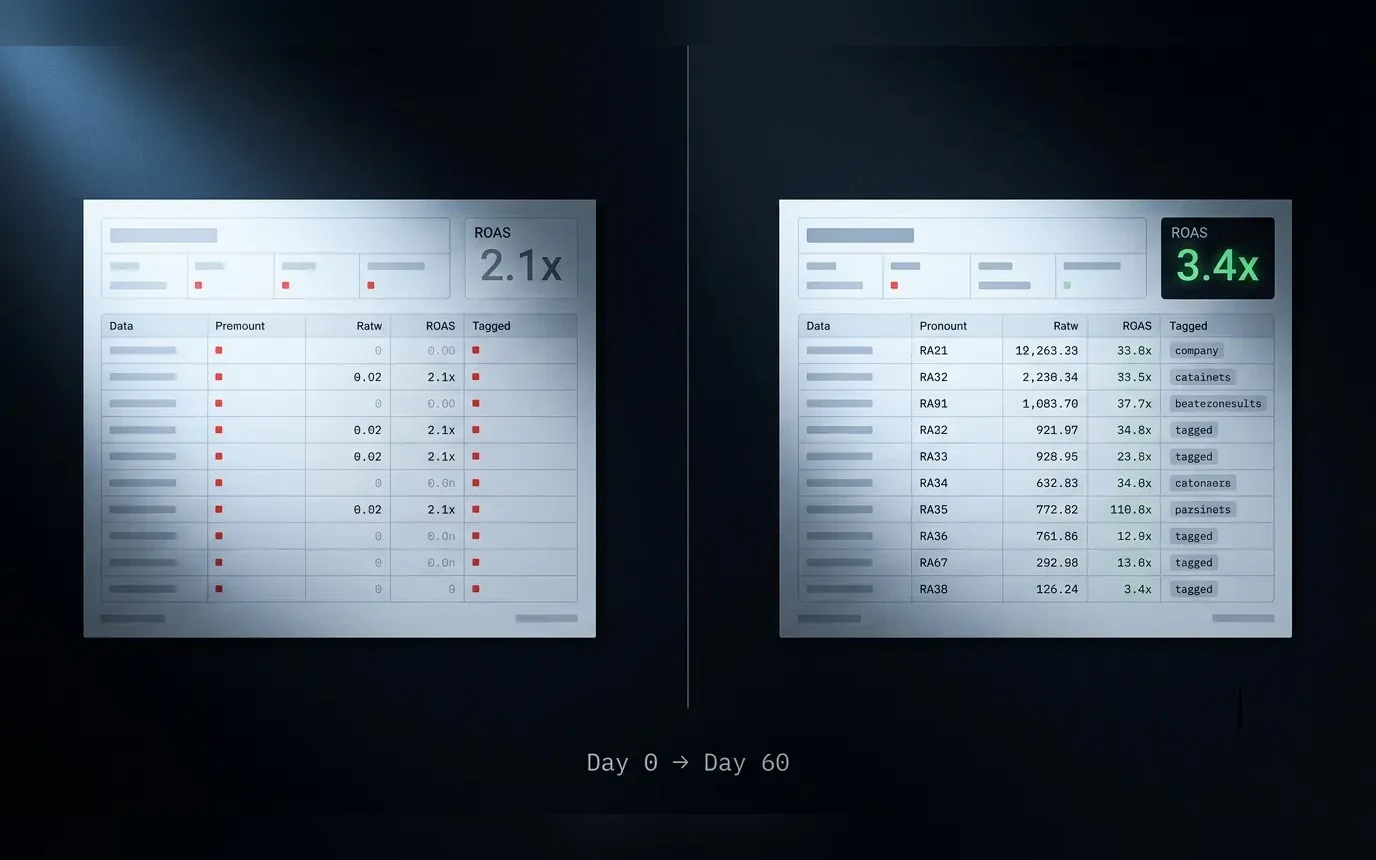
An online store from the pet industry had a solid catalog of ~800 SKUs and an active Google Shopping budget, but ROAS had been stagnating at 2.1x for months. An analysis of the Merchant Center account revealed a classic problem: the feed was technically correct (there were no critical errors preventing display), but it was far from optimized. Product titles were pulled directly from the ERP system and did not match how customers actually search, GTIN identifiers were missing on most products, and the category structure was too shallow and generic.
This is not an unusual situation in the local market. According to research by DataFeedWatch, most e-commerce sellers who record poor or average Shopping performance actually have a "technically valid" feed. The real problem lies not in technical errors, but in the quality and depth of the data itself.
What exactly was changed in the feed
The optimization did not require changing the site or changing the e-commerce platform. Everything was resolved in the layer between the webshop and Google Merchant Center, and was carried out in four phases over 60 days:
-
Title Optimization — Titles were rewritten according to a strictly defined format: [Brand] + [Category] + [Key Attributes: weight/flavor].
Example from practice: The original ERP name"RC Maxi Adult 15"was changed to"Royal Canin Maxi Adult dry dog food chicken 15kg". With this, we directly targeted users looking for a specific weight and flavor, using real search terms from Google Search Console. - Adding GTINs at the variation level — Barcodes (EAN-13) were manually mapped and added for ~73% of the catalog. Products from the pet industry without a GTIN are very difficult to position because Google cannot compare them with certainty with the same products from competitors. According to Google's data, products with correct GTINs record an average of 20% more clicks in Shopping auctions.
-
Segmentation by custom labels — This brought the biggest jump in ROAS. All products were grouped using
custom_label_0into three categories by margin (High, Medium, Low), andcustom_label_1by conversion rate (Bestsellers vs. Slow-movers). This allowed for the creation of separate campaigns and precise bidding by segment, instead of the previous "flat" strategy where all products had the same target ROAS. - Cleaning quiet "disapproved" listings — Although there were no fatal account errors, 12% of the most profitable part of the catalog had partial policy warnings and errors with mismatched prices between the feed and the site, which silently reduced impressions. By setting up an automated daily price refresh, these errors were minimized.
Results after 60 days
The best part of this case study is that the monthly Google Ads budget was not increased by a single cent. All changes were based exclusively on higher quality data submission to Google's algorithm, which led to the following measurable improvements over a two-month period:
| Metric | Before optimization | After 60 days | Change |
|---|---|---|---|
| ROAS | 2.1x | 3.4x | +62% |
| CTR | 0.84% | 1.31% | +56% |
| Impression Share | 34% | 51% | +50% |
| Disapproval rate | 12% | 1.8% | -85% |
Key conclusion
Feed optimization is one of the rare cases in paid search where you can increase revenue without increasing costs. Bids and budget are tactics — the feed is the foundation. If Google doesn't understand what you sell or your titles don't match search intent, even the most sophisticated bid strategy won't fix performance.
This is especially relevant for the local market where many sellers use automatically generated feeds directly from Shopify or WooCommerce without any subsequent optimization — which leaves significant room for competitive advantage.
Wondering where your feed stands?
Request a free feed audit and find out which attributes you can optimize today.
Follow this blog for future case studies and analyses.
Want this kind of result on your store?
Request a free analysis